


How We Know
Indigenous Histories
Understanding the Many Ways Historical Knowledge Is Preserved, Transmitted, and Interpreted
Indigenous histories are not contained in a single kind of record. Across different nations and cultures, knowledge has been preserved and transmitted through written records, oral histories, language, visual and material culture, ceremony, kinship, relationships to land, ecological knowledge, navigation, architecture, and other culturally specific practices. These forms of knowledge may work together rather than existing as separate or competing systems.
Understanding Indigenous history therefore requires more than asking what was written down. It requires asking who preserved the knowledge, how it was transmitted, what cultural context gives it meaning, who produced the surviving record, and what may have been altered, suppressed, misunderstood, or lost through colonization.
These questions are especially important when reconstructing histories of gender diversity, because many surviving accounts were created by outsiders who interpreted Indigenous lives through European assumptions about sex, gender, sexuality, religion, and social order.
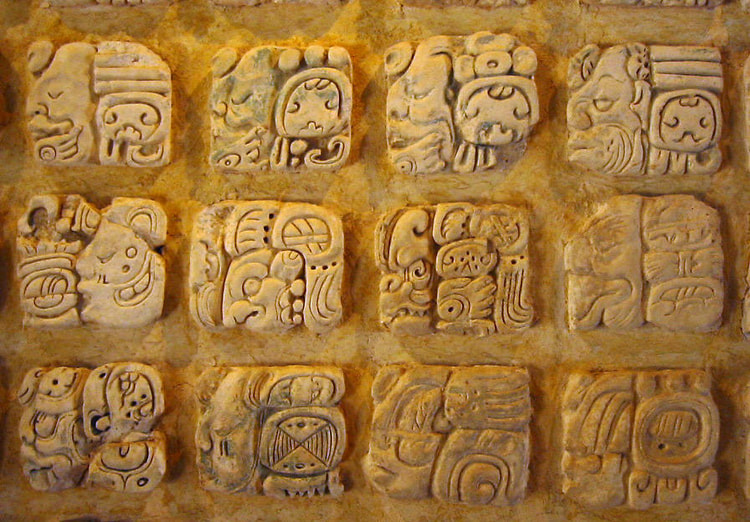
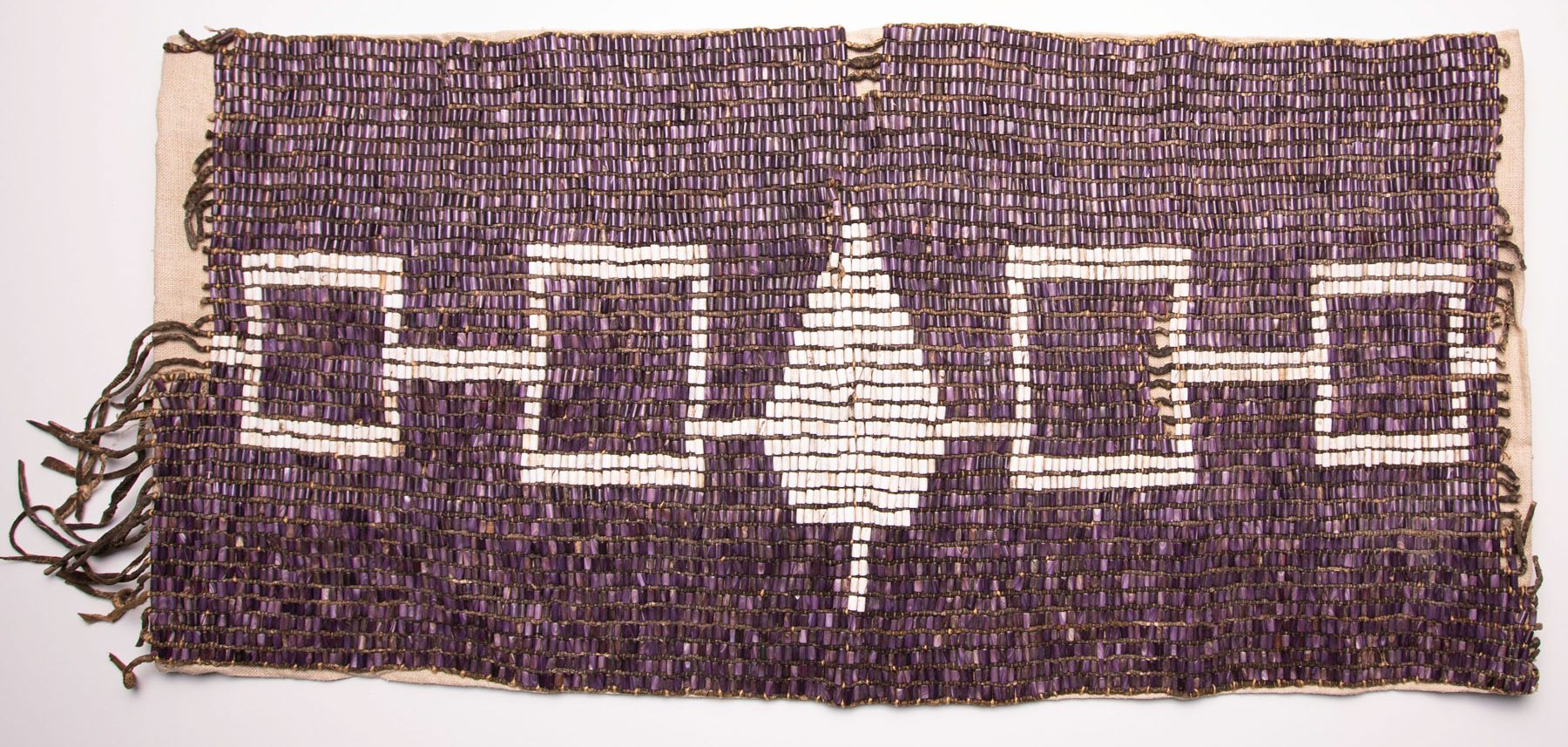


Indigenous historical knowledge survives through many interconnected forms—from written and material records to oral, visual, land-based, and relational systems of transmission
Image sources, left to right: Maya hieroglyphs, “Maya Writing”; , Onondaga Nation “Haudenosaunee Wampum belt”; Australian Aboriginal rock art, “Wanjina at Donkey Ridge”; Archaelogy Magazine, “Marshall Islands Stick Chart”.
On This Page
Historical Knowledge Takes Many Forms
Historical evidence is not limited to documents. People preserve knowledge about the past through many interconnected systems, and the forms that matter most differ across cultures, communities, places, and periods. Written records may be important, but so may oral histories, language, material objects, visual traditions, ceremony, kinship, relationships to land, ecological knowledge, architecture, and systems of navigation or memory.
These forms of evidence should not be placed in an automatic hierarchy with written documentation at the top. Each must be evaluated and understood within the cultural system that produced, preserved, and interpreted it.
In many Indigenous traditions, several forms of knowledge work together: a place may hold historical meaning that is preserved through oral tradition, reinforced through ceremony, encoded in language, and connected to material or visual records.
Written Records
Indigenous peoples have created and used many forms of written and graphic recordkeeping. These include writing systems developed within Indigenous societies as well as documents produced using writing systems introduced through colonization.
Written records can provide important historical evidence, but they also require context. Who created the record? For whom? For what purpose? What language and concepts were used? And did colonial institutions influence what was recorded, translated, preserved, or excluded?
Oral Histories and Language
Historical knowledge can be transmitted through spoken narratives, teachings, songs, names, genealogies, and other forms of oral tradition. These are not simply informal recollections. Within particular cultural traditions, they may be part of established systems for preserving and transmitting knowledge across generations.
Language itself can also preserve historical information. Names for people, places, relationships, social roles, ceremonies, and cultural practices may carry meanings that are difficult—or impossible—to reproduce accurately in another language.
Visual and Material Culture
Objects and images can also function as historical records. Wampum belts, rock art, textiles, carvings, pottery, architecture, clothing, and other forms of material culture may preserve information about relationships, events, social structures, beliefs, agreements, or collective memory.
Their meaning cannot necessarily be determined from appearance alone. Understanding them may depend upon cultural knowledge, community interpretation, provenance, and the circumstances in which an object was created and used.
Land, Ecology, and Navigation
Knowledge can also be preserved through relationships with particular landscapes and environments. Place names, travel routes, seasonal practices, ecological knowledge, settlement patterns, and navigation systems can carry historical information accumulated across generations.
In these contexts, the landscape itself may be part of the historical record—not merely the setting in which history occurred.
In this short video, Stephen Paquette discusses land acknowledgement and the relationship between Indigenous peoples, place, history, and responsibility.
Video: “Indigenous Voices — Land Acknowledgement,” Sheridan College.
Ceremony, Kinship, and Community Memory
Ceremonies, kinship systems, social responsibilities, and community practices can preserve historical knowledge about relationships among people and between communities, ancestors, places, and generations.
These forms of knowledge are especially important when studying subjects that colonial recordkeepers misunderstood, ignored, deliberately suppressed, or attempted to eliminate.
When the Surviving Record Was Written by Outsiders
Much of the written evidence available to historians about Indigenous peoples was produced not by Indigenous communities themselves, but by explorers, missionaries, traders, government officials, anthropologists, settlers, and other outsiders.
These records can contain valuable historical information. But they are not neutral windows into Indigenous life. Their authors interpreted what they encountered through their own languages, religious beliefs, social categories, political interests, and assumptions about how human societies were supposed to work.
This becomes particularly important when studying gender, sexuality, family structures, ceremonial roles, and social identities. European observers often encountered practices and relationships that did not fit neatly within European or Christian categories of male and female, marriage, sexuality, religion, or social status. What they recorded may therefore reflect both what they observed and how they interpreted—or misinterpreted—it.
Colonialism could further alter the record itself. Missionization, forced assimilation, boarding and residential schools, legal suppression of ceremonies and cultural practices, displacement from traditional lands, and pressures to conform to European gender and family systems could change what practices remained visible, what knowledge could safely be transmitted, and what later observers were able to document.
For that reason, reconstructing Indigenous histories requires reading colonial records critically and alongside other forms of evidence, including Indigenous oral histories, languages, community knowledge, material culture, and contemporary Indigenous scholarship.
The central question is not simply “What did the historical document say?”
It is also:
Who was speaking? Who was being described? What cultural assumptions shaped the description? What knowledge survived outside the written record—and whose interpretation should carry authority today?

Gender Diversity in Indigenous Histories
The histories of Indigenous gender diversity cannot be reduced to a single identity, role, or tradition. Indigenous nations developed their own languages, social structures, spiritual traditions, kinship systems, and understandings of gender. In some communities, these included recognized identities or social roles that did not correspond neatly to the male-female categories imposed by European societies.
Understanding those histories therefore requires Nation-specific evidence whenever possible. A term, role, or tradition documented within one Indigenous nation should not automatically be assumed to describe another. Similarities may exist across cultures, but those similarities do not erase important differences in language, meaning, social responsibility, ceremony, or community status.
Historical Identities Do Not Necessarily Correlate to Modern Labels
Modern terms such as transgender, nonbinary, gay, lesbian, and bisexual can sometimes help contemporary readers recognize aspects of gender or sexual diversity in the historical record. But they should not automatically be imposed on people whose cultures understood identity through different categories.
The same caution applies to Two-Spirit. The English term is a modern, pan-Indigenous identity adopted by Indigenous participants at a 1990 gathering in Manitoba and is now used by some Indigenous people whose gender, sexuality, spirituality, or social identity connects with Indigenous cultural traditions.
It is not a universal historical name for every gender-diverse Indigenous person, nor does it replace the specific terms and understandings of individual Indigenous nations.
Colonialism Changed What Could Be Seen—And What Could Survive
European colonization did more than produce biased descriptions of Indigenous gender systems. Colonial institutions also attempted to reshape Indigenous societies according to European and Christian expectations about sex, gender, marriage, family, religion, and social order.
Missionization, forced assimilation, boarding and residential schools, restrictions on ceremony, and other colonial policies disrupted the transmission of Indigenous languages and cultural knowledge. Practices that outsiders condemned could be driven underground, altered, or interrupted across generations.
The resulting historical silence should therefore be interpreted carefully. The absence of a practice from later written records does not necessarily demonstrate that the practice never existed. It may also reflect what colonial observers failed to recognize, what institutions attempted to suppress, what communities could no longer safely express, or what knowledge ceased to be transmitted in its earlier form.
Reconstructing these histories responsibly means resisting both extremes: we should neither erase Indigenous gender diversity because colonial records are incomplete, nor invent certainty where the surviving evidence does not support it.
The goal is to recover what can be known while remaining clear about whose culture is being described, whose terminology is being used, what the evidence actually demonstrates, and where uncertainty remains.
Specific Traditions, Specific Nations
Indigenous gender diversity is best understood at the level of particular peoples and traditions. Terms that may look similar when translated into English can carry very different cultural meanings, responsibilities, histories, and relationships to community. Rather than treating them as Indigenous equivalents of a single modern identity, we can examine what the surviving evidence tells us within each cultural context.
Zuni: Lhamana and We’wha
One of the best-documented historical examples comes from the Zuni people. We’wha, who lived from approximately 1849 to 1896, was recognized as lhamana and became known as an accomplished weaver, potter, ceremonial participant, and cultural ambassador. Smithsonian records identify We’wha specifically as a lhamana individual and preserve photographs and objects connected with their life.
We’wha also demonstrates the problems created by cultural translation. Nineteenth-century observers variously described We’wha using male and female categories, and during a celebrated 1886 visit to Washington, D.C., outsiders generally perceived We’wha as a woman. Those descriptions tell us something about the observers—but they do not necessarily tell us how Zuni people understood lhamana.
The historically responsible approach is therefore not to decide which modern Western identity We’wha “really was,” but to begin with the Zuni category that existed within We’wha’s own cultural world.
Diné: Nádleehí
Among the Diné (Navajo), Nádleehí represents another culturally specific tradition of gender diversity. The Navajo Nation itself describes Nádleehí as a traditional role reflecting the long-standing presence of gender diversity among Diné people, while explicitly cautioning that modern LGBTQ+ identities are not identical to traditional Diné cultural understandings.
That distinction matters. Describing Nádleehí simply as “transgender,” “nonbinary,” or even “Two-Spirit” may help outsiders establish a rough point of reference, but none of those terms automatically reproduces the cultural meaning of the Diné category itself.
The evidence therefore asks us to do something more difficult—and more accurate—than finding historical equivalents for modern labels: it asks us to understand gender within the cultural systems in which those identities and roles existed.
Sources:
- Smithsonian National Museum of the American Indian — We’wha archival materials and identification as lhamana
- National Park Service — additional historical context on We’wha
- Navajo Nation Office of the President and Vice President — Diné discussion of Nádleehí and gender diversity
Continuity, Disruption, and Reclamation
Colonialism did not affect every Indigenous nation or gender tradition in the same way. Some identities, roles, terms, and forms of knowledge continued within communities. Others became less visible, changed under pressure, were driven underground, or became difficult to reconstruct after generations of cultural disruption.
That complexity matters. Historical continuity should not be assumed simply because a tradition is recognized today—but neither should colonial silence be mistaken for evidence that a tradition disappeared. The surviving record may reflect both cultural change and the conditions under which Indigenous people were able—or unable—to preserve and express their own knowledge.
Reclaiming Two-Spirit
The adoption of Two-Spirit in 1990 was part of a broader movement by Indigenous LGBTQ+ people to define themselves through Indigenous community and culture rather than relying exclusively on terminology inherited from non-Indigenous society. During the 1990s, Indigenous LGBTQ+ groups increasingly incorporated Two-Spirit into their names and organizing, and the term developed into an important contemporary identity and movement.
That reclamation should not be confused with the creation of a single ancient identity called “Two-Spirit.” Two-Spirit is contemporary; the Indigenous histories to which people may connect through it are older, culturally diverse, and Nation-specific. Not every Indigenous LGBTQ+ person identifies as Two-Spirit, and its meaning can differ among First Nations, Inuit, Métis, American Indian, Alaska Native, and other Indigenous communities.
Reclamation is therefore also about authority: who has the right to name these identities, interpret their histories, recover suppressed knowledge, and determine what those traditions mean within Indigenous communities today.
The historical task is not to force the past into either a colonial framework or a modern LGBTQ+ one. It is to recognize what the evidence supports, acknowledge what colonization disrupted, and give appropriate weight to Indigenous voices interpreting Indigenous histories.
Sources:
- Canadian Museum for Human Rights — What Is Two-Spirit? Part One: Origins
- Canadian Museum for Human Rights — The Re-emergence of 2Spirit People in the 21st Century
Reading Older Sources: Colonial Terminology
Older historical and anthropological sources often use terms for Indigenous gender-diverse people that are now considered inaccurate, reductive, or offensive.
One of the most common is “berdache,” a term European and Euro-American writers applied broadly to people whose gender roles, clothing, work, relationships, or social positions did not fit European expectations. The term did not originate within Indigenous cultures and did not accurately represent the many distinct identities and roles it was used to describe. By the late twentieth century, Indigenous people and scholars increasingly rejected it; the adoption of Two-Spirit in 1990 was partly an effort to move away from terminology imposed by outsiders. The National Park Service explicitly notes that berdache reflected European interpretations rather than how Native people understood themselves.
When older sources use such language, however, historians cannot simply ignore it. Those terms may be necessary for locating archival records, understanding how earlier researchers classified Indigenous people, or tracing how colonial attitudes shaped the historical record.
For that reason, this page may reproduce outdated terminology when discussing or identifying a historical source, but it will not use those terms as contemporary descriptions of Indigenous people.
The language of a source is itself historical evidence. It can tell us not only about the person being described, but also about the assumptions, prejudices, and conceptual limits of the person doing the describing.
Sources:
- National Park Service — Sexual and Gender Diversity in Native America and the Pacific Islands
- Indian Health Service — Two-Spirit
What Colonial Observers Actually Recorded
Colonial accounts must be read critically, but their biases do not make them historically useless. In some cases, the very confusion or condemnation expressed by European observers provides evidence that they were encountering social roles and gender practices that did not fit their own expectations.
Sixteenth-Century Spanish Accounts
One of the earliest surviving European accounts comes from Álvar Núñez Cabeza de Vaca, whose travels through what is now Texas and the American Southwest began after his expedition was shipwrecked near Galveston Island in 1528. His account, first published in 1542, describes a relationship he interpreted as a marriage between two men, one of whom dressed or covered themself as women did and performed work Cabeza de Vaca associated with women.
Just as revealing is the language with which he interpreted what he saw. Cabeza de Vaca characterized the practice through a Christian moral framework, treating it as something sinful or diabolical rather than attempting to understand its meaning within the Indigenous society he was describing.
The account therefore preserves two kinds of historical evidence at once:
- evidence that a gendered social arrangement existed, and
- evidence of the colonial worldview through which a European observer interpreted it.
Eighteenth-Century Alta California
More than two centuries later, Spanish military officers and Catholic missionaries in Alta California repeatedly documented Indigenous people whom they described as men who dressed, worked, or lived in ways Europeans associated with women.
Spanish colonists used the term joyas for some of these people. That was an outsider label, however, not a single Indigenous identity. Modern scholarship has shown that the colonial term could collapse distinct Nation-specific roles and traditions into one category created by Spanish observers.
The records are particularly important because they also document colonial reactions. Some Spanish observers recognized that gender-diverse people held respected positions within their communities, while missionaries and colonial authorities viewed those traditions as incompatible with Christian social and sexual norms and sought to suppress them.
What These Records Can—and Cannot—Tell Us
These accounts do not allow us to reconstruct every Indigenous person’s identity, language, social role, or understanding of gender. The surviving descriptions remain filtered through outsiders who often misunderstood what they encountered.
But they establish something historically important: European colonizers were encountering Indigenous gender roles and social arrangements that did not fit European Christian gender expectations centuries before the development of modern LGBTQ+ terminology.
The challenge is therefore not to decide which modern identity label should be placed on every person in these records. It is to recover what the evidence demonstrates while recognizing both the Indigenous cultural systems being observed and the colonial assumptions embedded in the surviving description.
Sources:
- Library of Congress — Naufragios de Alvar Núñez Cabeza de Vaca
- Gomez-Galisteo — “Subverting Gender Roles in the Sixteenth Century”
- Jesperson — “Trans misogyny in the colonial archive: Re-membering trans feminine life and death in New Spain, 1604–1821”
- Magaña Mancillas & Balbuena Bello — “Joyas o indios vestidos de mujer en la Alta California colonial”
Why the Historical Record is Uneven
The surviving evidence for Indigenous gender diversity is not distributed evenly across nations, regions, or periods. Some Indigenous peoples appear repeatedly in colonial and anthropological records, while others are represented by only a handful of references—or by no surviving written description at all.
That unevenness does not necessarily reflect how common or uncommon gender diversity was. It is, however, a reflection of the history of colonization and documentation itself:
- which outsiders encountered particular communities
- how closely they observed Indigenous social life
- what knowledge remained accessible by the time later researchers arrived
Spanish missionaries, for example, sometimes produced detailed accounts of Indigenous communities because conversion required them to observe—and often attempt to change—local religious, social, sexual, and gender practices. In other regions, colonial settlers recorded far less about the cultures of the peoples whose lands they occupied. By the time professional anthropologists began documenting many Indigenous communities in the nineteenth and early twentieth centuries, generations of displacement, assimilation, missionization, and cultural disruption had already altered what could be observed or remembered.
When Historical Silence is Produced
Some gaps in the historical record are accidental. Others emerge from deliberate efforts to interrupt cultural continuity.
Assimilation policies did not merely change what outsiders happened to observe. Boarding and residential schools separated children from families and communities, punished the use of Indigenous languages, imposed Christian religious and social expectations, and attempted to replace Indigenous systems of knowledge and identity with those preferred by colonial governments and institutions.
When a language is suppressed, ceremonies are prohibited, children are prevented from learning from elders, or culturally specific social roles are condemned and driven from public life, the effect extends beyond the generation experiencing the policy. Knowledge may become dangerous to transmit, difficult to recover, or absent from the records available to later historians.
This means that historical silence cannot always be treated as passive emptiness. In some circumstances, silence itself is evidence of a process: people and institutions exercised power over what could be practiced, taught, named, remembered, and passed forward.
That process leaves its own imprint on the historical record. The uneven archive that survives is therefore not only a problem of incomplete documentation; some of its gaps and distortions may themselves reflect deliberate cultural erasure.
Those gaps, concentrations, and distortions require careful interpretation. A tradition that appears frequently in surviving records may have been unusually visible to outsiders rather than uniquely important. A tradition documented only once may have been widespread but poorly recorded. And the absence of written evidence may reflect the history of the archive as much as the history of the people being studied.
This is why historians sometimes use ethnohistory—bringing written records into conversation with oral traditions, Indigenous languages, archaeology, material culture, community knowledge, and later ethnographic evidence—to investigate histories that cannot be reconstructed from colonial documents alone.
None of these methods can manufacture evidence that has been lost. But they can help historians distinguish between “we have no evidence this existed” and the much stronger claim “this did not exist.” Those are not the same historical conclusion.
Why This Matters in the Present
Historical erasure is not confined to the past. Institutions also shape the historical record through what they preserve, teach, publish, remove, restrict, or make difficult to access.
Contemporary efforts to remove trans+ histories, educational materials, terminology, public information, and other resources demonstrate why this distinction matters. These circumstances are not historically equivalent to the colonization of Indigenous peoples, and they should not be treated as such. But they reveal a related mechanism: when institutions restrict what can be named, taught, documented, or transmitted, they can influence what future generations are able to know about a people and their history.
Erasure does not require destroying every surviving record. It can also work by narrowing what remains visible, accessible, teachable, and culturally transmissible.
Historical erasure is therefore not only something historians uncover in the past. It is also something societies can create in the present.
Sources:
- National Park Service — Sexual and Gender Diversity in Native America and the Pacific Islands
- National Centre for Truth and Reconciliation — Residential School History
- National Archives — Bureau of Indian Affairs School Records
- Gregory D. Smithers — Cherokee “Two Spirits”: Gender, Ritual, and Spirituality in the Native South
- Reuters — US Health Agencies Scrub HIV, Other Data to remove ‘gender ideology’
- PEN America — The Normalization of Book Banning
Who Holds Authority Over Indigenous Knowledge?
For much of colonial history, Indigenous knowledge was treated as something outsiders could collect, classify, translate, publish, display, and interpret. Museums, universities, anthropologists, missionaries, government agencies, and private collectors accumulated cultural materials and records—often with little control remaining in the communities from which they came.
That history raises another question about how Indigenous histories should be reconstructed today:
Who has the authority to determine what Indigenous knowledge means, how it should be preserved, and who should have access to it?
Access Is Not the Same as Entitlement
Not all historical or cultural knowledge is necessarily intended for unrestricted public circulation. Depending upon the Nation or community, particular knowledge may belong to specific families, clans, ceremonial societies, knowledge holders, genders, or other culturally defined groups. Some information may be sacred, restricted, seasonal, private, or appropriate to share only under particular circumstances.
This creates an important distinction for historians and educators: the absence of information from a public archive does not necessarily mean that the knowledge has been lost. It may remain within a community while being intentionally protected from broader circulation.
Indigenous control over knowledge is also increasingly recognized as a matter of rights and self-determination. The United Nations Declaration on the Rights of Indigenous Peoples recognizes Indigenous peoples’ rights to maintain, control, protect, and develop their cultural heritage, traditional knowledge, and cultural expressions, as well as to transmit their histories, languages, and oral traditions to future generations.
From Ownership to Stewardship
Archives and museums have also begun reconsidering older assumptions that legal possession automatically grants unlimited authority over Indigenous cultural materials.
Contemporary archival standards increasingly emphasize consultation, culturally appropriate access, shared stewardship, repatriation, and the authority of originating communities. Some institutions restrict images or information identified by Indigenous communities as culturally sensitive. Others return cultural materials or develop arrangements in which communities participate directly in decisions about their care, interpretation, and use.
These practices reflect a larger change in historical method: Indigenous peoples are not simply subjects from whom evidence is extracted. They are communities with living relationships to the histories, objects, languages, traditions, and knowledge being studied.
For this page, that means giving substantial weight to Nation-specific Indigenous sources, contemporary community knowledge, and Indigenous scholars and cultural authorities, while remaining clear about disagreement, change over time, and gaps in the surviving evidence.
Respecting Indigenous history therefore sometimes requires asking not only “What can we discover?”
It also requires asking:
“What are we entitled to know, who should interpret it, and whose permission or authority matters?”
Sources:
- United Nations — United Nations Declaration on the Rights of Indigenous Peoples
- Society of American Archivists — Protocols for Native American Archival Materials
- National Museum of the American Indian — Shared Stewardship and Ethical Returns
- National Museum of the American Indian — Statement on Online Collections and Culturally Sensitive Collections
Evaluating Claims About Indigenous Gender History
Claims about Indigenous gender diversity appear in academic writing, museums, advocacy materials, social media, political debate, and popular histories. Some are carefully grounded in Nation-specific evidence. Others flatten many Indigenous cultures into a single story, repeat outdated colonial interpretations, or present uncertain historical conclusions as established fact.
A useful starting point is therefore not simply “Does this claim support what I already believe?” but “What evidence supports it, and how was that evidence interpreted?”
Questions to Ask
- Which Indigenous nation, community, or people is being discussed? Broad statements about what “Native Americans believed” should immediately invite closer scrutiny.
- What terminology is being used, and where did it come from? Is the term Indigenous and Nation-specific, a modern pan-Indigenous identity such as Two-Spirit, a contemporary LGBTQ+ label, or terminology imposed by colonial observers?
- What is the source of the evidence? Is the claim based on Indigenous oral or community knowledge, language, material culture, colonial writing, later anthropology, contemporary scholarship, or some combination of these?
- Who interpreted the evidence? A colonial observer, missionary, anthropologist, Indigenous scholar, community knowledge holder, or modern writer may approach the same evidence from very different cultural assumptions.
- How certain is the conclusion? Does the evidence establish a specific identity or role, or does it demonstrate only that a person or practice did not fit European gender expectations?
- Is absence being mistaken for proof? A missing written record may reflect cultural disruption, suppression, restricted knowledge, poor documentation, or archival loss rather than historical nonexistence.
- Does the interpretation respect Indigenous authority? Where contemporary Indigenous communities or cultural authorities have addressed their own histories and terminology, their perspectives deserve substantial weight.

Precision Matters
Responsible history does not require certainty where certainty is impossible. It requires being clear about:
- what the evidence establishes
- what remains uncertain
- whose terminology is being used
- whose cultural framework gives the evidence meaning
That standard protects against two opposite errors:
- using gaps in colonial archives to erase Indigenous gender diversity
- overstating fragmentary evidence in order to construct a simplified or romanticized version of the past
The strongest historical argument is not the one that makes the broadest claim. It is the one that can show readers where the evidence comes from, what it can reasonably tell us, and where its limits remain.