4.9 satisfaction rating/14k+ learners

Anti-Trans+ Hate:

Intersecting Ideologies

Mythology, Christian Nationalism, TERFs, and the “Manosphere”

This essay features Jenn Burleton’s distillation of primary intersectional, ideological influences and instigators of anti-trans+ hate over the past fifty-plus years. These conclusions are based on her work as an educator advocating for the human rights of gender-diverse people of all ages.

Defining Mythology (aka Religion)

Before the advent of the scientific method, human beings created stories (mythologies) to explain natural phenomena and things that were mysterious to them. Myths and mythologies were early attempts at establishing causes for observed events:

  • "Where does the sun come from?"
  • "Where does the sun go?"
  • "Why am I here?"
  • "What happens when I die?"
  • "Why am I different from animals?"
  • "Why can't giant sloths talk?"

For most of human history, myths involved worship of multiple "gods" and "demigods" (polytheism). Over time, many of these mythologies became "religions". Some of them became monotheistic (a single 'Divine' being), though they continued to have the same speculative, and ephemeral explanations for 'how and why things happen'.

Key characteristics of myths include:

  • Supernatural elements
  • Symbolic meaning
  • "Moral" lessons about the Universe
  • Reflection of a culture's worldview
  • Traditions passed down through generations

For this reason, and in the interest of fairness and consistency, Burleton Education refers to and categorizes all such "religious" metaphysical speculation as mythology.

Click HERE to learn more about different types of myths.

Christian Nationalism

Christian Nationalism is a political ideology that seeks to fuse a particular vision of Christianity—usually conservative, Protestant/Catholic, and culturally traditional—with the identity, institutions, and public policies of a nation. In the U.S. context, it promotes the idea that America was founded as a Christian nation, that its laws and public life should reflect “Christian values,” and that the government should privilege Christianity over other religions or secular approaches.

  • Advocates for laws that reflect conservative Christian moral teachings.

  • Often focuses on issues like gender roles, LGBTQ+ rights, reproductive rights, and school curricula.

  • Emphasizes strong leadership framed as divinely appointed.

  • Portrays political opponents as enemies of God or the nation.

To learn more, read "Anti-LGBTQ+ Intersections" (pg. 18) by Jenn Burleton.

Anti-Trans Judaic Extremism

Anti-transgender sentiment within Judaism is not a single unified ideology. Instead, it appears primarily in specific sectors, often tied to particular interpretations of halakhah (Jewish law), broader political identities, or contemporary cultural conflicts.

Rabbinic foundations for opposition to transgender+ affirmation are associated with:

Genesis 1:27 and Deuteronomy 22:5

To learn more, read "Anti-LGBTQ+ Intersections" (pg. 6) by Jenn Burleton.

Trans Exclusionary Radical Feminism

Trans-Exclusionary Radical Feminism (TERF) is a term commonly used to describe a subset of radical feminist thought that excludes transgender women from womanhood and from women’s spaces, rights, and advocacy.

The term is descriptive of an ideology, not a self-chosen label—most people described this way do not use it for themselves. For many, their preferred term is "Gender-Critical Feminism".*

*To learn more about TERFs' strategic preference for the term "Gender-Critical Feminists" and their collaboration with Christian Nationalists, read "Anti-LGBTQ+ Intersections" (pg. 29) by Jenn Burleton.

Core features of TERF ideology include:

  • Biological essentialism: It defines womanhood strictly in terms of biological sex assigned at birth, rejecting gender identity as a basis for inclusion.

  • Exclusion from feminism: It argues that trans women are not women and therefore should not be included in feminist organizing, women’s spaces, or gender-based rights frameworks.

  • Focus on patriarchy as biologically rooted: Traditional radical feminist analysis of patriarchy is extended to claim that people assigned male at birth inherently benefit from and embody male socialization, even if they identify or live as women.

  • TERF ideology often opposes:

    • Access to transition-related healthcare

    • Legal recognition of gender identity

    • Inclusion of trans women in shelters, prisons, sports, and other women-centered institutions

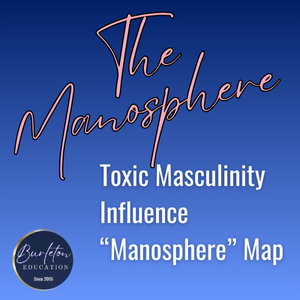
Manosphere

The manosphere is a loose, largely online constellation of blogs, forums, influencers, and social media communities focused on men’s issues—but often framed through ideologies that range from traditionalist to openly misogynistic.

The manosphere is an online network of communities that claim to advance men’s interests but frequently promote narratives rooted in gender essentialism, antifeminism, and—in some sectors—conspiracy thinking about women, feminism, and society. While some corners focus on self-help or dating advice, others are explicitly hostile toward women, LGBTQ+ people, and social equality efforts.

The ecosystem spans platforms such as Reddit, YouTube, X (Twitter), TikTok, 4chan/8chan (8kun), and personal blogs that influence mainstream politics and culture through memes, influencers, and algorithmic amplification.

To learn more about the manosphere, read "Anti-LGBTQ+ Intersections" (pages 31-35) by Jenn Burleton.

Tier 1 | $5.00 per month

BENEFITS OF SUBSCRIBING
  • Original Educational Video Content
  • “When We Fight!” ZOOM Livestream

Tier 2 | $7.50 per month

BENEFITS OF SUBSCRIBING
  • Original Educational Video Content
  • “When We Fight!” ZOOM Livestream
  • Private Consultation w/ Jenn Burleton (3 per calendar year)

Thank you for supporting our continued delivery of in-person and online gender diversity education and advocacy content!